The American Historical Review has put together a set of syllabus resources about the history of authoritarianism, with the hope that they would be useful to teachers, high school and college alike:
Authoritarianism 101: A Global History is a set of 30 primary source-driven teaching modules designed to offer teachers and students a broad perspective on the history of authoritarianism. The AHR commissioned historians working on authoritarian histories in Africa, Asia, Europe, Latin America, the Middle East, and North America to write teaching modules that explored a singular instance of an authoritarian past. Temporally, they range from the seventeenth to the early twenty-first centuries, with the bulk of modules concentrating on the long twentieth century.
Each module fuses scholarly content and teaching, nesting the source in a core question, a brief context essay based on the latest scholarship, and a teaching plan that suggests varied ways to dissect the primary source. We hope that high school social studies teachers see in the modules a way to study authoritarianism through the inquiry arc, and that college professors recognize the kinds of core questions that animate the research and teaching in their fields. The query-driven design of the modules reminds us that, at its best, history is a discipline driven by good questions, the kind that lead us to compelling human stories and dilemmas worthy of deep reflection and ongoing debate.
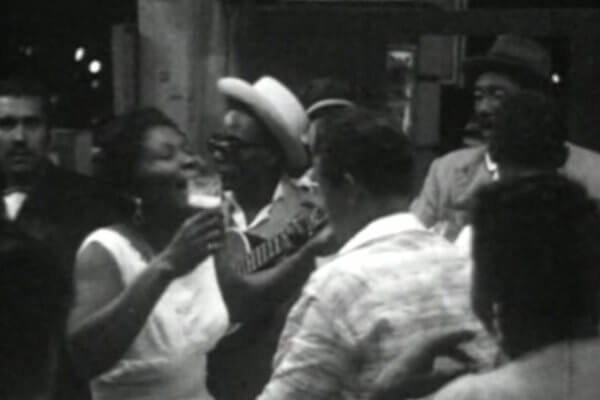
I put together a module about cultural practices after the Cuban Revolution, through a brief discussion of the first censored film after the revolution, P.M. I would have picked one of the more straightforward right-wing authoritarian regimes in Latin America, but they were already being covered by other scholars. I thought this case worthy of inclusion, and an opportunity to talk about the ways that culture matters to authoritarian governments:
Teaching P.M. requires students to sit with confusion. The first question that watching even a few minutes of it raises is: Why? Why should this film have been banned? It doesn’t appear particularly political. Nevertheless, the Cuban Film Institute judged it to be counter-revolutionary…
Precisely because the film’s sins are not obvious, discussing it provides an opportunity to examine the importance of culture to authoritarian states. Why did Cuban authorities care about an independent film? Authoritarian states seek to dominate information and entertainment alike: to assert veto power over culture. They declare that the criterion for acceptability is compatibility with the regime’s goals. Sometimes a murky message to cultural producers is all the more effective at bringing them into line, since no one is sure just what will be tolerated and what will cross over the line.
The whole project is open access. You can access my module here and the whole collection here.


Leave a Reply